Arizona Shade Sails / Applications
Park & Playground Shade Structures
Plan shade around the places people pause: picnic tables, gathering areas, paths and waiting spaces can have very different requirements.
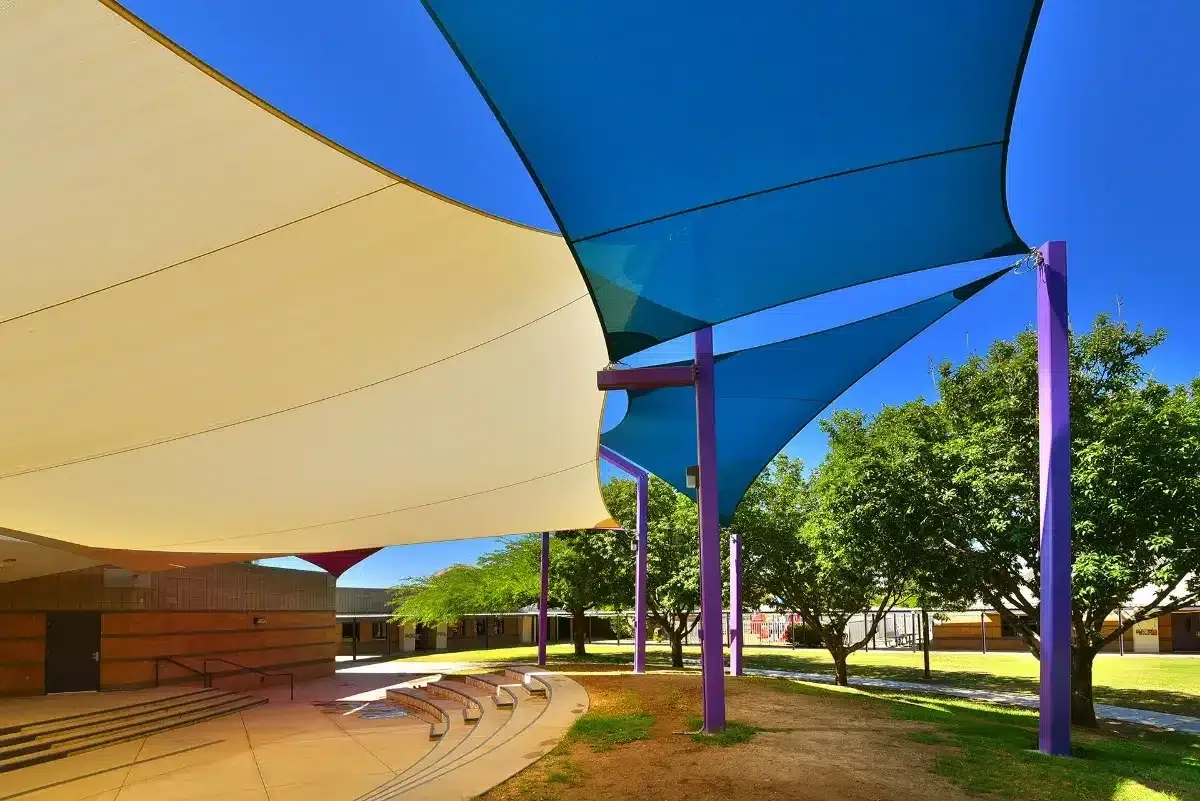
Project photograph / Coyote Trail / SHADE Industries
01 / Project detail
Prioritize the occupied amenities
A picnic table, waiting spot and play structure are different shade targets. Mark where people pause and which hours matter, then compare the footprint rather than asking for an equal amount of fabric across the whole park.
For equipment areas, bring the operator’s layout and clearance requirements. For picnic/gathering areas, include accessible seating and routes. The pole layout should not create an avoidable obstruction to the activity the shade is meant to support.
02 / Project detail
Match coverage to the activity
| Area or use | Information to show | Decision to review |
|---|---|---|
| Picnic/gathering | Tables and accessible positions | Shade during occupied hours |
| Equipment play | Equipment plan and circulation | Operator-defined clearances and sightlines |
| Path/waiting | Places people pause or queue | Connections and feasible supports |
03 / Project detail
Consider maintenance vehicles and ground work
Irrigation, utilities, trees and service access can constrain foundations. Ask what excavation and reinstatement are included and how the area is separated from public use during work. Keep future fabric repair access in the ownership plan instead of treating it as an afterthought.
04 / Project detail
Build a useful project brief
- Amenity layout and accessible seating positions.
- Public access and sightline requirements.
- Tree, irrigation and utility constraints.
- Owner procurement, approvals and maintenance responsibilities.
Clear answers
Questions before the next step.
Should shade cover every part of a park?
Usually the brief should prioritize occupied areas and useful routes. A site-specific plan helps decide where targeted coverage is more practical than trying to cover an entire landscape.
Can existing shade be repaired or replaced?
Start with a condition review of the fabric, supports and connections. Repair, a replacement panel or a revised layout may be appropriate depending on the actual problem.
Will shade prevent playground surfaces becoming hot?
Shade can reduce direct sun exposure within its footprint, but surface conditions still vary. Keep the operator’s equipment and heat-use checks in place; avoid a blanket safety guarantee.
Can tree shade and a structure be planned together?
Yes, as part of a site-specific brief. Existing trees can affect exposure and feasible construction locations; do not use them as anchors without appropriate assessment.
Does the canopy outline define the shaded play area?
No. Sun angle and connection heights change the footprint. Compare the actual occupied equipment/amenity area at the relevant hours.