Stepping onto your patio in Phoenix during July feels less like walking outside and more like opening a blast furnace, doesn’t it? You know that feeling, right? It is why finding the right exterior shading options isn’t just a luxury for us here in the Valley—it is totally essential for actually enjoying your home.
Let’s Be Real About the Arizona Sun
Living in places like Mesa or Gilbert means we have a relationship with the sun that people in other parts of the country just don’t understand. We love it in January, but come summer, it becomes an adversary. Honestly, it’s brutal. The UV rays here do a number on everything. Your patio furniture? Faded. Your car dashboard? Cracked. Your skin? Well, let’s not even go there.
Here’s the thing: shading your home isn’t just about making the backyard look cool (though that helps). It is about creating a livable space where you aren’t sprinting from the back door to the pool to avoid burning your feet. Plus, effective exterior shading can drastically lower your cooling costs. When you stop the heat before it hits your windows or walls, your AC unit doesn’t have to run a marathon every afternoon.
Why Shade Sails Are Kinda Taking Over
Have you noticed those sleek, geometric Fabric shapes popping up over Parks in Scottsdale or driveways in Chandler? Those are shade sails, and they are popular for a reason.
Let me explain why they work so well here. Unlike a solid roof, a shade sail is made from a high-density polyethylene (HDPE) fabric. It sounds scientific, I know, but all it really means is that the fabric is knitted, not woven. This allows hot air to rise through the fabric rather than getting trapped underneath it.
If you put up a solid tin roof or a heavy canvas awning, you might create shade, but you also create a heat trap. It feels stuffy. A custom shade sail creates a convection current—hot air goes up and out, and cooler air is drawn in from the sides. It can actually lower the ambient temperature underneath by 15 to 20 degrees. That is the difference between enjoying a BBQ and sweating through your shirt in five minutes.
Also, they just look cool. You can twist them, overlap them, and mix Colors to match your house. It’s architectural, not just functional.
The Old School Cool of Awnings
Now, I’m not knocking awnings. They have been around forever because they work. If you drive through older neighborhoods in Tempe, you’ll see plenty of them.
Retractable awnings are pretty handy because they give you control. Want the sun in the winter to warm up the house? Retract it. Need to block the glare in August? Extend it. It’s a nice bit of flexibility.
However, there is a catch. Mechanical parts break. In our dusty, gritty environment, the motors and gears can get jammed up if you aren’t maintaining them constantly. Plus, high winds—and we all know about the monsoons—can turn a retractable awning into a giant sail that rips right off the wall if you forget to pull it in during a storm.
If you go with an awning, fixed aluminum ones are tougher, but they can get loud when it rains (rare as that is) and they radiate heat downward.
Pergolas: The Structural Statement
Pergolas are the heavyweights of the shading world. They add serious definition to a backyard. Whether it’s wood or Alumawood (which looks like wood but doesn’t rot or get eaten by termites—a big plus in AZ), a pergola is a permanent structure.
But here is a mild contradiction: A pergola by itself doesn’t actually provide full shade. It provides filtered shade. You get those slats of light coming through. It’s pretty, sure, but at 2 PM in June, those slivers of sunlight feel like laser beams.
Many homeowners end up retrofitting their pergolas. They weave fabric through the slats or install a shade sail right on top of the structure to get full UV protection.
Comparing the Top Contenders
Sometimes it helps to see it all laid out. Here is a quick breakdown of how these options stack up against each other in our climate.
| Feature | Shade Sails | Retractable Awnings | Pergolas (Open Top) |
|---|---|---|---|
| Heat Reduction | High (Breathable) | Medium (Traps some heat) | Low (Filtered sun) |
| Wind Resistance | High (If properly tensioned) | Low (Must retract) | High (Permanent structure) |
| Cost Effectiveness | High | Medium/Low | Low (Expensive build) |
| UV Protection | 90-98% | varies by fabric | 40-60% |
| Maintenance | Low (Occasional cleaning) | High (Mechanical parts) | Medium (Painting/Sealing) |
Don’t Forget the Vertical Shade
We usually think about shade coming from above, but in the morning and late afternoon, the sun attacks from the side. We call this “western exposure,” and it is the enemy of lower energy bills.
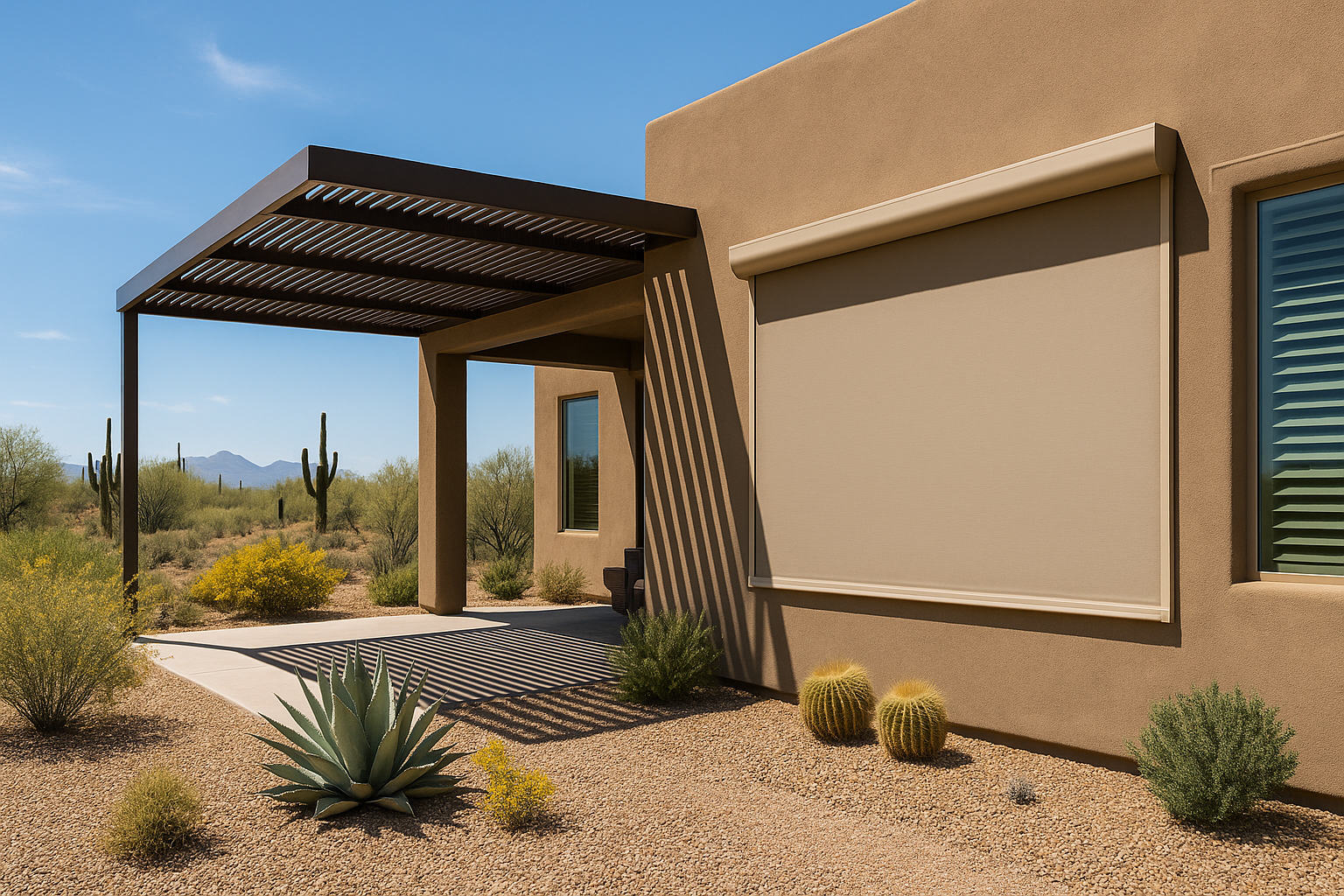
Exterior solar screens or rolling shutters are fantastic for this. They mount on the outside of your window. Once the heat hits the glass, it’s too late—the heat is already inside your house. Stopping the sun before it hits the window is the most efficient way to cool a room.
You can combine these with overhead shading. For instance, a shade sail over the patio protects the outdoor living space, while solar screens on the windows protect the interior of the home. It’s a one-two punch against the heat.
The “Natural” Route: Trees
Okay, I have to mention trees. Planting a nice Mesquite or a Palo Verde is a great long-term strategy. They provide shade and cool the air through transpiration (plants sweating, basically).
But let’s be honest about the downsides. Trees take time. You plant a 24-inch box tree today, and you might get decent shade in about five to seven years. Can you wait that long? Plus, trees are messy. If you have a pool, you know the struggle of skimming leaves out of the water every single day. And roots? They love to mess with your patio foundation or plumbing lines.
Trees are great supplements to Shade Structures, but relying on them as your only source of relief is a slow game to play.
Material Matters: It’s Not Just Cloth
When you are looking at fabrics, especially for shade sails or awnings, don’t just pick the color you like. You have to look at the specs.
You’ll see terms like GSM (Grams per Square Meter). Generally, a higher number means a heavier, more durable fabric. You also want to look at the UV Block percentage. In Arizona, you really want something that blocks at least 90% of UV rays. Anything less, and you are still getting sunburned while sitting in the “shade.”
Another thing? Be careful with “waterproof” fabrics. I know, it sounds good. “Hey, I can sit outside in the rain!” But waterproof usually means airflow-proof. If the air can’t go through, the heat stays underneath. Unless you have a very high mounting point to let heat escape, waterproof sails can create an oven effect. For most residential backyards in Phoenix, breathable fabric is the way to go.
The DIY Trap vs. Professional Installation
I get it. We all watch those home improvement shows and think, “I can do that with a weekend and a trip to the Hardware store.”
But here is the thing about Arizona: the ground is like concrete. We have caliche—that hard, cement-like clay layer. Digging proper footings for Posts is hard work. Like, jackhammer work.
Also, we have to talk about tension. Shade sails rely on significant tension to stay stable and look good. If they are loose, they flap around in the wind, which wears out the fabric and the hardware quickly. A professionally installed sail uses steel posts set deep in concrete, with turnbuckles that can crank that fabric tight enough to bounce a quarter off it.
If you attach a heavy shade load to the fascia of your house without reinforcing it, you might pull the fascia board right off the rafters during a monsoon gust. That is a Repair bill nobody wants.
Making the Choice for Your Home
So, what is the best move for you? It depends on your space.
If you have a small courtyard in Tempe, a single triangular shade sail might add a modern touch and keep the pavers from burning your feet. If you have a sprawling backyard in Gilbert with a pool, you might need a multi-sail setup or a large cantilever structure.
Think about how the sun moves across your yard. Go outside at 10 AM, 1 PM, and 4 PM. Snap some photos. Where is the shadow falling? You might be surprised to see that the spot you want to shade needs the cover placed slightly to the west to account for the afternoon angle.
Don’t just guess. This is an investment in your home’s value and your personal comfort.
Let’s Get You Covered
It is time to take back your backyard and stop hiding indoors all summer. Arizona Shade Sails is here to help you Design a custom solution that fits your style and stands up to the desert heat. Give us a call at 480-418-8438 or reach out online to Request a Free Quote today.