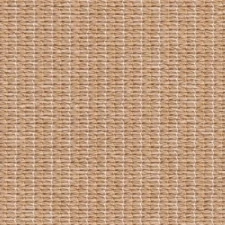
 Desert Sand
Knitted HDPE shade cloth
GALE Commercial
Commercial NinetyFive 340
An open knitted construction for breathable shade. Standard and FR versions remain separate product specifications.
Explore the color libraryManufacturer product data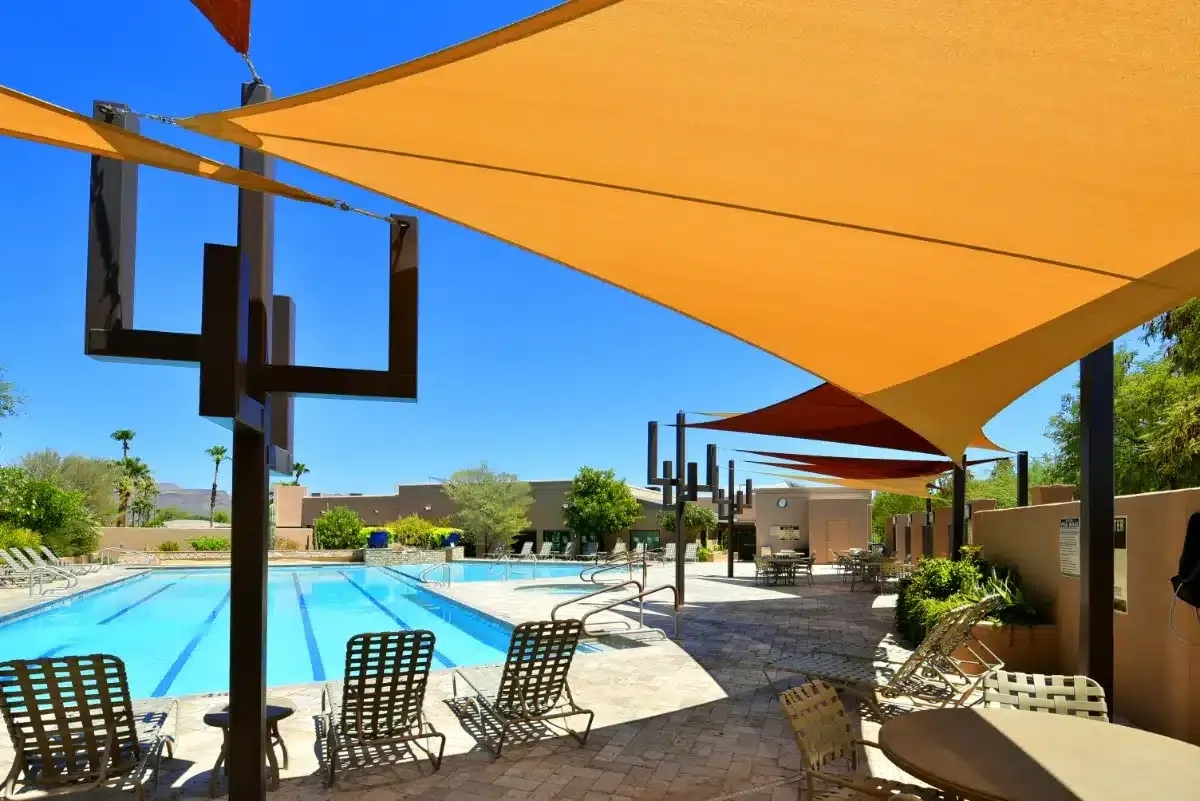
Arizona Shade Sails / Materials & structures
Start with the coverage you need, then choose the fabric, color and construction details. Explore breathable shade cloth and selected waterproof options for a site-specific shade system.
Project photograph / Rio Verde HOA / SHADE Industries
Coverage first
For sun shading with airflow, knitted HDPE shade cloth is a practical starting point. Its open construction is different from a coated waterproof membrane. If rain protection is part of the brief, choose the fabric and water-handling design together.
Swipe to compare →
| What matters | Breathable HDPE shade cloth | Selected waterproof membrane |
|---|---|---|
| Main objective | Sun shading with an open knitted fabric | Sun shading with specified rain coverage |
| Airflow | Porous construction allows air passage | A continuous membrane changes air movement |
| Rain | Water can pass through the fabric | Runoff needs a planned route away from occupied areas |
| Product selection | Exact collection and color-specific data | Exact membrane, seams and installed configuration |
| Final confirmation | Physical sample and written specification | Physical sample, water handling and written specification |
Manufacturer references
GALE Commercial, Polyfab USA and Serge Ferrari publish different fabric collections, constructions and color ranges. The references below connect that research to the color library; SHADE Industries confirms the selected line and current availability for your project.
Desert SandKnitted HDPE shade cloth
Commercial NinetyFive 340
An open knitted construction for breathable shade. Standard and FR versions remain separate product specifications.
Explore the color libraryManufacturer product data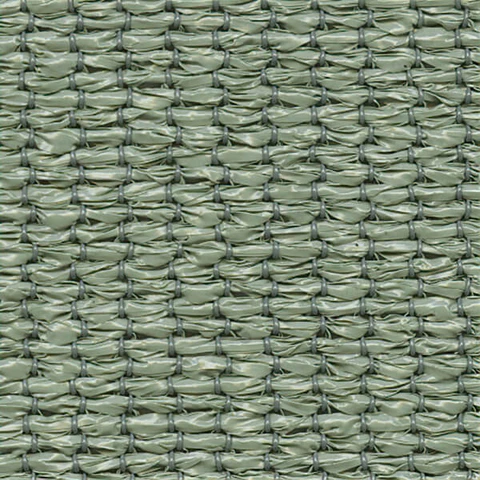 Sage
Knitted shade cloth
Comtex+
A shadecloth collection with its own construction, performance data and palette. Compare the exact series, not the brand name alone.
Explore the color libraryManufacturer product data Revival Blue / 502V2-51946C
Coated waterproof membrane
Soltis 502 Proof
A waterproof membrane reference for a specified assembly. Seam treatment and water handling belong in the design.
Explore the color libraryManufacturer product dataPalette and setting
A close-up shows the weave or surface. A project photograph shows how shade relates to a building, planting and outdoor use. The installation photographs here illustrate design possibilities, not a verified manufacturer or fabric line.
Compare a physical sample with the property’s paint, paving and furniture in its actual light. Digital swatches help narrow the direction, but screen settings and lighting change their appearance.
Browse Fabric Colors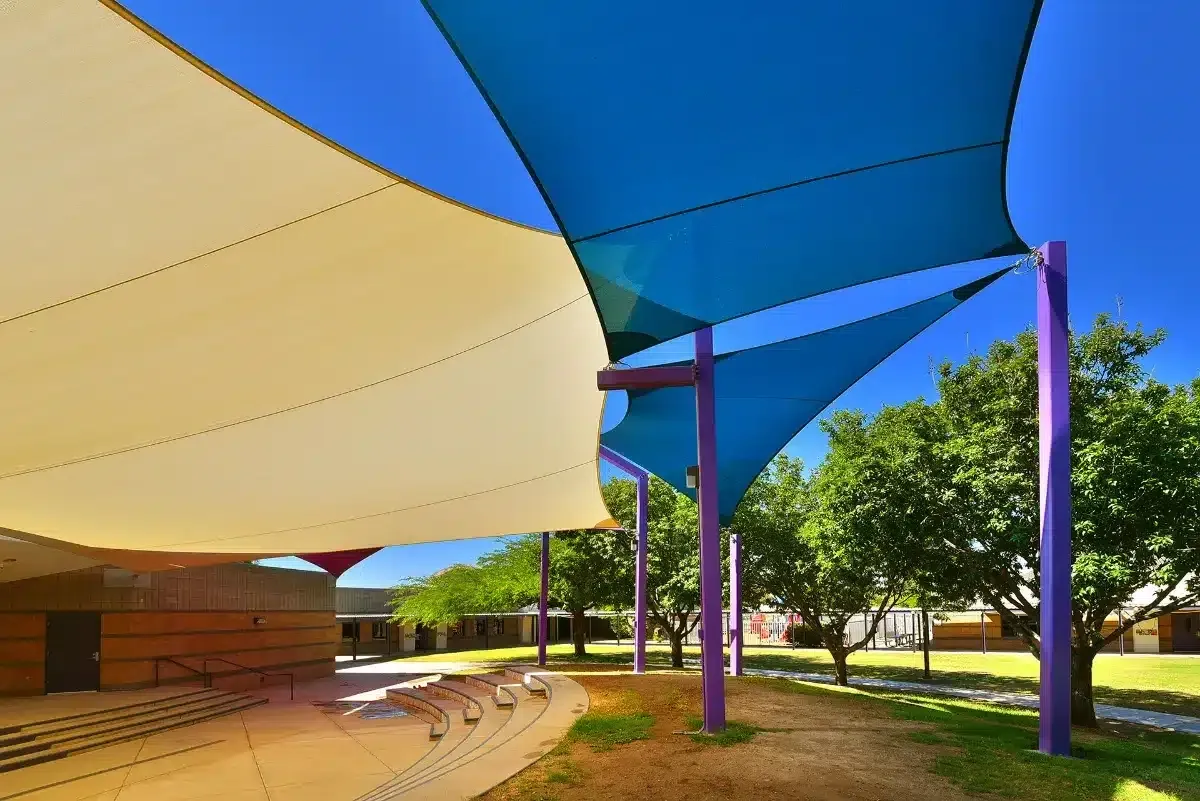
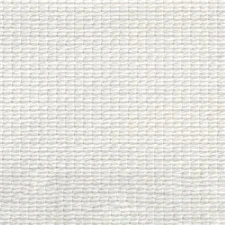 WhiteGALE CommercialDesert SandGALE Commercial
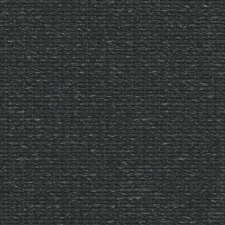 CharcoalGALE CommercialSagePolyfab USA
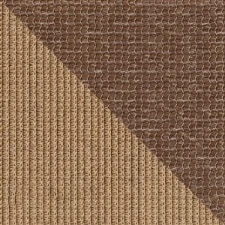 Gold RushGALE CommercialRevival BlueSerge Ferrari
Selected manufacturer references. Screen colors are approximate; review physical samples and confirm project availability.
Edges, seams and corners
The edges and corners complete a custom sail. SHADE Industries describes lock-stitched seams with Tenara thread, reinforced corners, edge pockets and corrosion-resistant connection hardware. Ask which construction details are included in your sail.
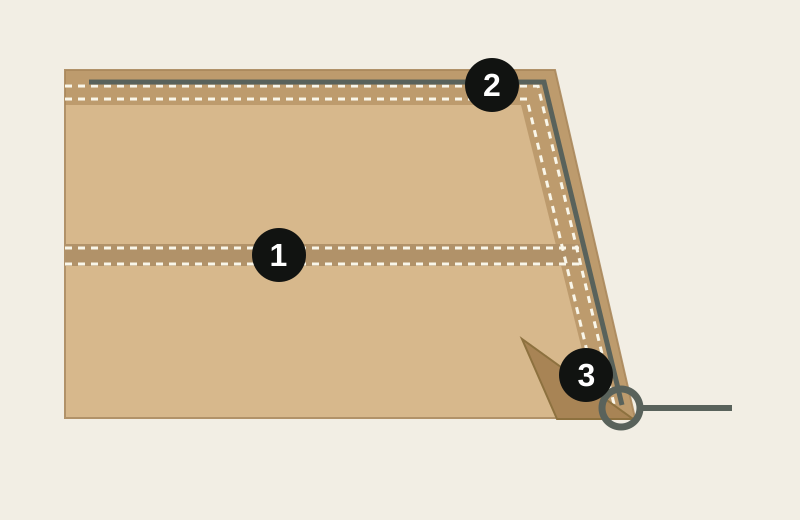
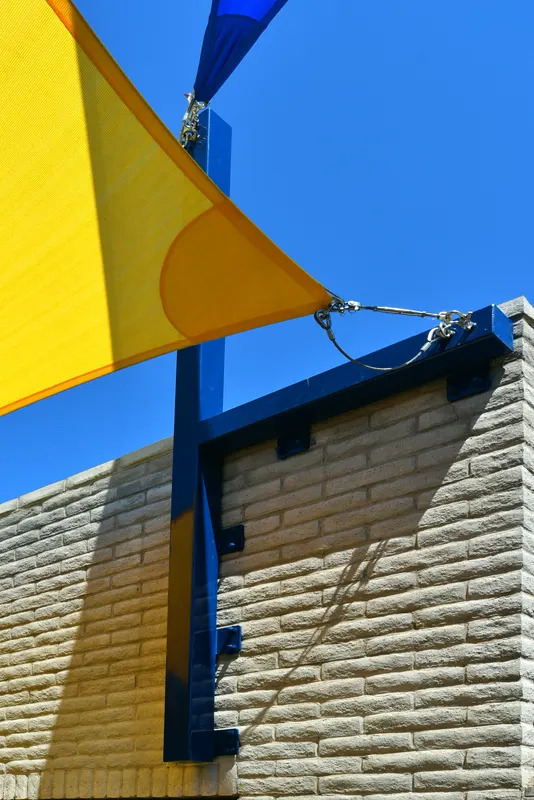
Keep the selected fabric, thread, edge construction and hardware together in the proposal. For waterproof work, the membrane, seam treatment, slope and drainage need to be specified as one assembly.
Specification, care and coverage
Keep the product name, color or reference code, fabrication details and written warranty with the project records. Fabric UV-degradation coverage, manufacturing defects and installation workmanship can have different terms.
Use the selected manufacturer’s cleaning instructions. Start with approved gentle methods; avoid abrasive cleaning, unapproved chemicals and aggressive pressure washing. Torn fabric, damaged seams or persistent distortion needs an assessment rather than harder cleaning.
Clear answers
No. Porous HDPE allows water passage. For rain protection, discuss a suitable waterproof fabric and an assembly designed around seams, slope and drainage.
Use the manufacturer’s current data for the exact collection and color. Shade factor and UV blocking are different specifications; one percentage should not be assigned to every fabric.
You can shortlist colors early. Keep the manufacturer and collection with each choice, then confirm suitability, current availability and a physical sample before final selection.
Request the exact product and variant, applicable fire-test documentation, installation specification, care instructions and written warranty terms. The project team confirms what reports are required and accepted.