Arizona Shade Sails / Applications
University & Campus Shade Structures
Campus shade connects more than individual tables. It can support gathering, outdoor study, dining and pedestrian movement across a changing campus.
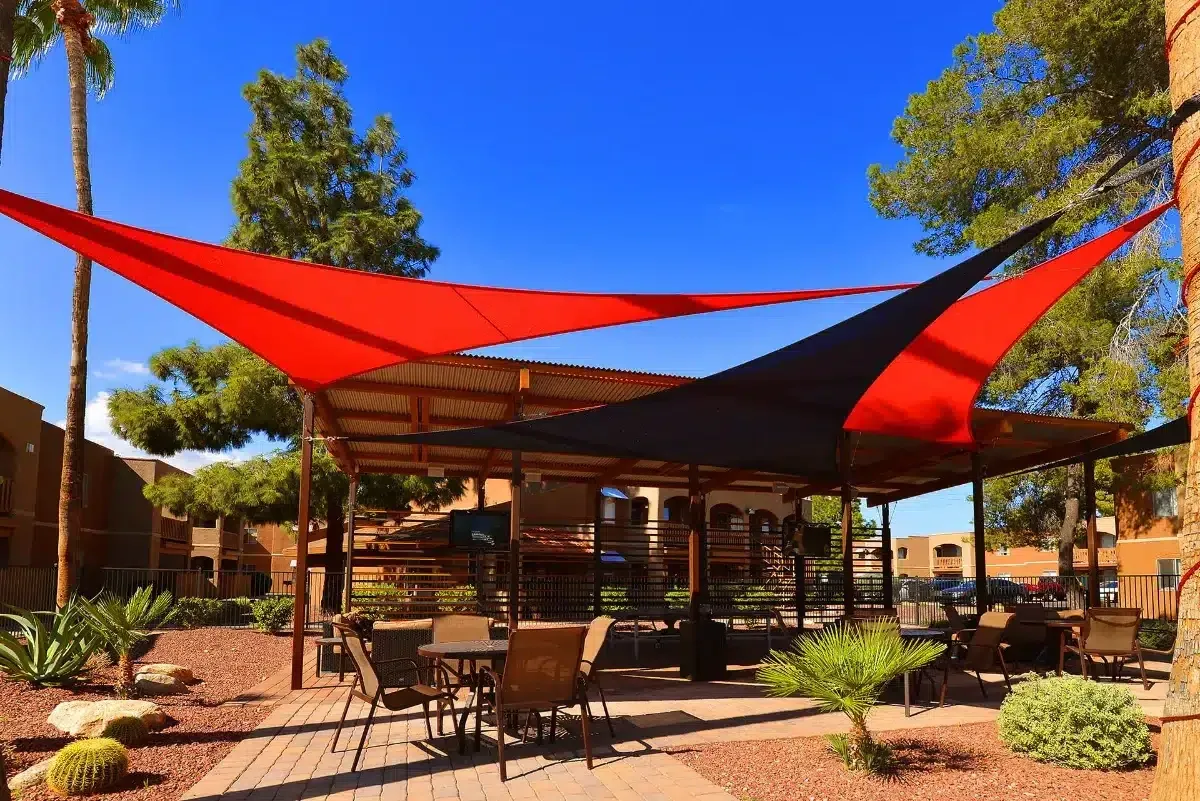
Project photograph / College Town / SHADE Industries
01 / Project detail
Compare destinations with pedestrian connections
A campus gathering area can need concentrated shade over furniture, while a route between buildings needs coverage that works with movement. Identify peak foot traffic and the time the place is used; do not assume a canopy beside a path shades the path itself.
Coordinate the structure with entrances, landscape and planned campus works. A feasible support location today can conflict with a utility route or future building interface, so use the current plan revision in the brief.
02 / Project detail
Match coverage to the activity
| Area or use | Information to show | Decision to review |
|---|---|---|
| Outdoor study/dining | Furniture and occupied periods | Supports, entrances and circulation |
| Pedestrian link | Busy route and destination | Where coverage falls along the route |
| Campus retrofit | Existing plans/interfaces | Utilities, future works and maintenance access |
03 / Project detail
Specify for the campus ownership team
Universities may have drawing, submittal and procurement requirements that differ from a small property project. Ask which 3D/CAD, engineering, approval and close-out outputs are included. Give the facilities team a clear maintenance and replacement-access discussion before construction.
04 / Project detail
Build a useful project brief
- Peak pedestrian flow and occupied hours.
- Building entrances, accessible routes and landscape interfaces.
- Campus drawing/submittal and procurement requirements.
- Facilities-team maintenance and close-out expectations.
Clear answers
Questions before the next step.
Can a campus project include existing courtyards?
Yes, subject to site and structural review. Existing paving, underground services and building connections may constrain an otherwise open-looking space.
Can existing shade be repaired or replaced?
Start with a condition review of the fabric, supports and connections. Repair, a replacement panel or a revised layout may be appropriate depending on the actual problem.
Should a campus shade study include different times of year?
Discuss the periods that matter to the actual activity. The provider’s geographically located models can assess the agreed times rather than relying on a single rendering.
Can shade integrate with new landscape design?
That is part of the provider’s published professional-design collaboration. Coordinate planting, lighting, access and foundations with the relevant project teams.