Arizona Shade Sails / Applications
Tennis Court Shade Structures
Player rest areas, spectators and waiting positions are useful starting points for shade without intruding into the playing environment.
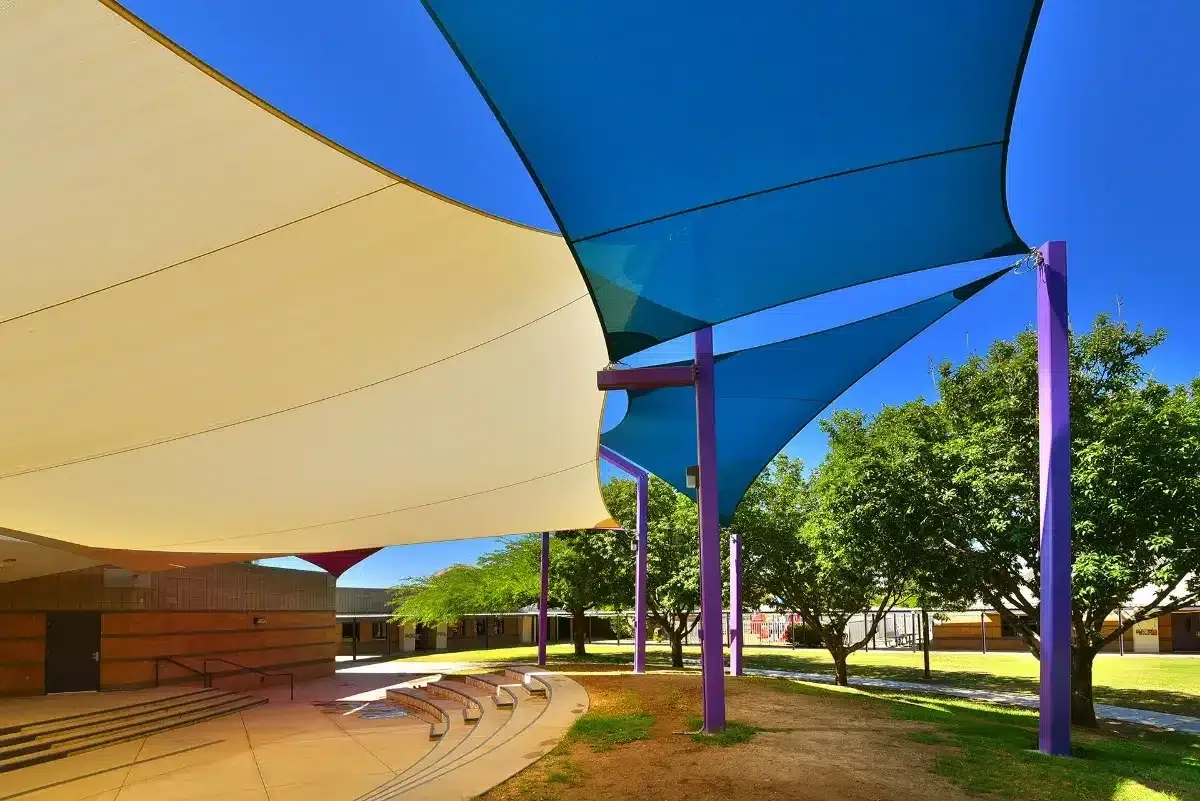
Project photograph / Coyote Trail / SHADE Industries
01 / Project detail
Distinguish rest shade from over-court coverage
Benches, waiting positions and spectator seating are focused briefs. Covering play introduces a different geometry and clearance discussion. Show net posts, fencing, gates and lighting and the operator’s required playing/run-off envelope.
The support layout should keep relevant movement and sightlines clear. An existing court fence should not be assumed suitable for fabric tension simply because it sits beside the area.
02 / Project detail
Match coverage to the activity
| Area or use | Information to show | Decision to review |
|---|---|---|
| Player rest | Benches and occupied hours | Coverage outside required play envelope |
| Spectators/waiting | Seating and gates | Sightlines and walking routes |
| Over-court brief | Court/net/lighting plan | Qualified clearance and structural review |
03 / Project detail
Coordinate construction with the surface
Describe how the installation area is reached and which playing surfaces need protection. Agree closures, foundation work and reinstatement before scheduling. Ask how future fabric work can be accessed without improvising support changes or obstructing the court.
04 / Project detail
Build a useful project brief
- Court layout, operator clearance requirements and gates.
- Player, spectator and waiting-area priorities.
- Lighting, fence and access interfaces.
- Court closures and surface-restoration requirements.
Clear answers
Questions before the next step.
Can a tennis fence support a shade sail?
Not by assumption. The fence, foundations and proposed loads need assessment; court fencing is not automatically designed to support a tensioned shade system.
Can existing shade be repaired or replaced?
Start with a condition review of the fabric, supports and connections. Repair, a replacement panel or a revised layout may be appropriate depending on the actual problem.
Should the same structure cover players and spectators?
Maybe, but assess the two occupied areas and hours separately. The activity and feasible support locations should guide the comparison.