Arizona Shade Sails / Services
Shade Sail Repair & Existing-Structure Improvements
Find out whether the right next step is a repair, a replacement panel or a change to the structure. The cause of the problem matters as much as the visible damage.
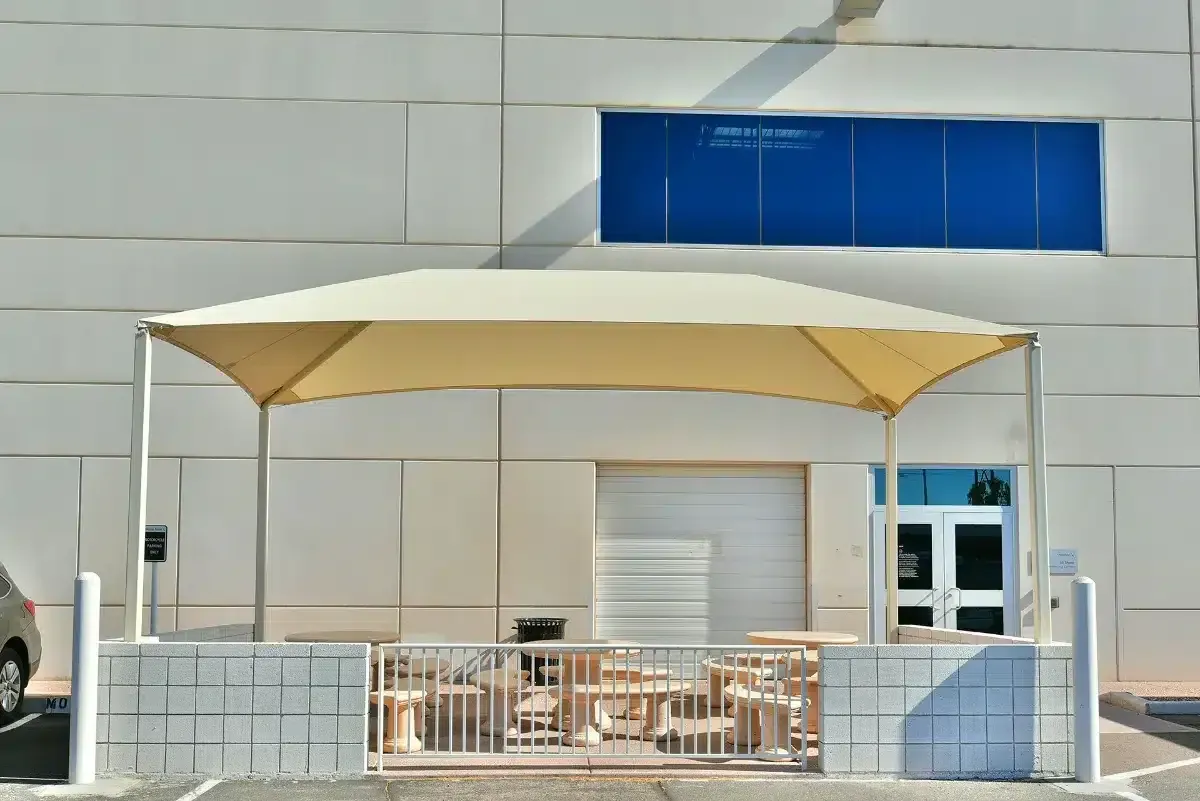
Project photograph / American Airlines / SHADE Industries
01 / Project detail
Treat the cause, not only the tear
A small tear can be a localized fabric problem; repeated damage can indicate poor tension, rubbing, deteriorated fabric or an unsuitable connection. Share when the issue appeared and whether it recurs after previous repairs.
Do not climb the structure, improvise new anchors or retension a commercial system while waiting for an assessment. Restrict access beneath a visibly damaged or unstable installation and contact the provider about an appropriate response.
02 / Project detail
Repair is a condition-based decision
SHADE Industries publishes repair work involving fabric panels and seams, welding where appropriate, and removal, storage and reinstallation. The usable condition of the surrounding fabric and the suitability of the structure determine whether repair is worthwhile.
An old brittle panel may not justify another patch. Damage to posts, foundations or structural connections also requires a different response from a fabric repair. A site review should distinguish those issues instead of presenting every problem as a replacement sale.
03 / Project detail
Improve shade that misses its target
A structure can be intact and still shade the wrong area. If occupied tables, play equipment or a queue sit outside the useful footprint, review the timing of use, sail geometry and support locations.
Improvements may involve revised panels, different connection heights or additional structural work. The existing installation must be assessed before committing to modifications, particularly where the original installer or design information is unknown.
04 / Project detail
Information that helps the first review
- Wide photographs showing the whole structure and occupied area.
- Safe ground-level photographs of the damage or wear.
- A description of when shade is inadequate or damage started.
- Previous repair history and any available design records.
- Whether the affected area can remain closed during the work.
05 / Project detail
Repair, replace or improve: compare three outcomes
A localized seam/panel issue may justify repair when the surrounding fabric is usable. Degraded fabric or substantial damage may justify replacement. A sound installation that shades the wrong area calls for coverage/layout review rather than automatic patching.
Share photographs of the whole installation as well as the visible damage. Explain whether the issue followed a particular event, recurs after repairs or has existed since installation. That context helps distinguish a material problem from a connection or design problem.
06 / Project detail
Removal and reinstatement need planning
The provider publishes removal, storage and reinstallation services. Ask which of those tasks are appropriate and included, how the panel will be protected and who is responsible for work-zone access.
Keep people away from a visibly unstable installation and avoid field improvisation. Adding a new tie-off or tightening one corner can change the forces elsewhere in the system. An assessment should establish a defined repair/modification scope before that work proceeds.
Clear answers
Questions before the next step.
Do you work on structures installed by another company?
SHADE Industries publishes improvements to structures installed by others. Acceptance depends on condition, design information, access and the suitability of the proposed work.
Is routine fabric cleaning the same as a repair?
No. Cleaning does not restore degraded fabric or fix a structural problem. Follow the selected fabric manufacturer’s cleaning instructions and arrange an assessment for damage or recurring sagging.