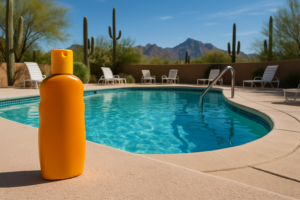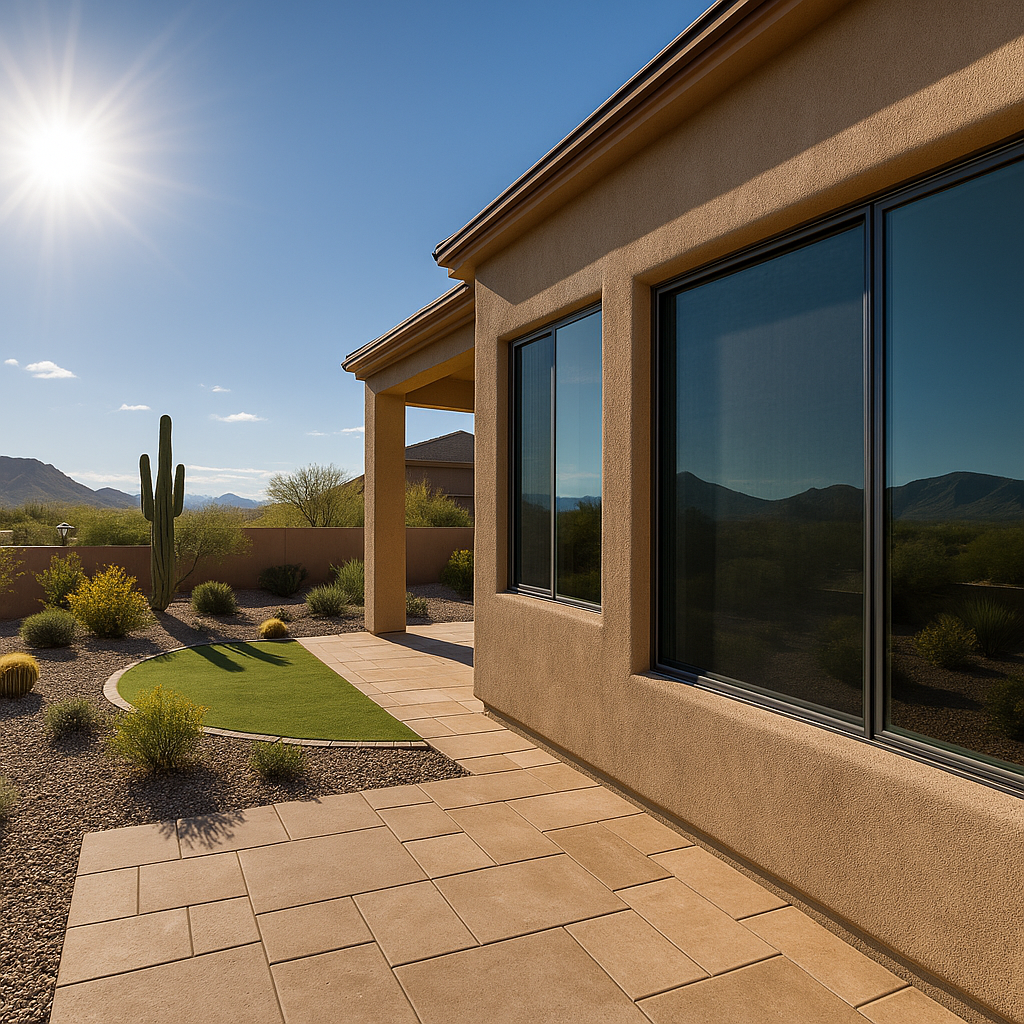
Living in the Valley of the Sun means we have a complicated relationship with the weather; we love the mild winters, but once May hits, stepping outside can feel like opening a hot oven door. If you own a home or Business in Phoenix, Mesa, or anywhere in between, you know that finding relief from that intense glare isn’t just a luxury—it is an absolute necessity for survival. That is exactly why UV-resistant residential shades are more than just a backyard accessory; they are the first line of defense for your property and your health.
Contents
- 1 Why the Arizona Sun is Different
- 2 Saving Your Skin (Literally and Figuratively)
- 3 The “Sunscreen” for Your Furniture
- 4 Breathability: The Secret Sauce
- 5 Lowering the AC Bill (Yes, Really)
- 6 It’s Got to Handle the Monsoon
- 7 Commercial Applications: It’s Not Just for Backyards
- 8 The Aesthetic Factor: Curb Appeal
- 9 Why Professional Installation Matters
- 10 Reclaiming Your Summer
Why the Arizona Sun is Different
You know what? People from other parts of the country love to say, “But it’s a dry heat!” And sure, they have a point, but dry heat at 115 degrees still cooks everything it touches. The UV index in Arizona is consistently off the charts compared to the rest of the country.
When we talk about UV radiation, we aren’t just talking about getting a sunburn. We are dealing with high-energy waves that break down Materials on a molecular level. It’s relentless. If you leave a plastic chair out in a Gilbert backyard for a summer, it turns brittle and snaps by September. That is the power of the sun we are dealing with.
So, when you look at installing Shade Structures, you have to think beyond just “blocking the light.” You need materials engineered to withstand that specific type of solar assault. Standard canvas from a big-box store might last a season in Seattle, but here? It’ll be toast before the monsoons roll in.
Saving Your Skin (Literally and Figuratively)
Let’s be honest for a second. How often do you actually use your patio in the summer? Probably not as much as you’d like. It’s a shame, really, because we pay a premium for outdoor living spaces in places like Scottsdale and Chandler.
Installing high-quality, UV-resistant Shade Sails changes that dynamic. By blocking up to 98% of harmful UV rays, you are creating a safe zone. This isn’t just about temperature—though we will get to that—it is about safety.
- Skin Protection: You can sit outside without slathering on SPF 50 every twenty minutes.
- Glare Reduction: Ever try to read a book or look at your phone outside? High-density Fabric cuts the glare so you aren’t squinting the whole time.
- Pet Safety: The pavement and pavers get hot enough to burn paws. Shaded areas keep the ground touchable for your four-legged friends.
It’s about reclaiming your territory. You shouldn’t have to hide inside from June to September.
The “Sunscreen” for Your Furniture
Here’s a digression, but a relevant one. Have you ever noticed how quickly car dashboards crack here if you don’t use a sunshade? Your house is no different.
UV rays are the primary cause of fading for outdoor furniture, cushions, decking, and even the paint on your house. If you have a nice outdoor kitchen in Tempe or a pool deck in Mesa, leaving them exposed is like throwing money into a fire.
UV-resistant fabrics act as a permanent shield. By filtering out the harsh spectrum of light, you extend the life of everything underneath the canopy. Those expensive Sunbrella cushions? They’ll actually keep their color. The wood on your deck? It won’t dry out and splinter nearly as fast.
Think of an investment in shade sails as an insurance policy for the rest of your outdoor gear. It creates a buffer zone that keeps your stuff looking new, longer.
Breathability: The Secret Sauce
Okay, let me explain a bit of the technical side, but I’ll keep it simple. Not all shade is created equal.
If you put up a solid, waterproof tarp, you block the sun, sure. But you also trap the heat. Hot air rises, hits the tarp, and stays there. You end up sitting in a stifling pocket of hot air. It’s miserable.
The magic of commercial-grade shade sails (specifically High-Density Polyethylene, or HDPE) is that they breathe. They are knitted, not woven. This allows the hot air to rise through the fabric while still blocking the UV rays.
Here is a quick breakdown of why the material matters:
| Feature | Generic “Big Box” Shade | Arizona Shade Sails (HDPE) |
|---|---|---|
| Airflow | Poor (often traps heat) | Excellent (hot air escapes) |
| UV Block | Inconsistent (40-60%) | High Efficiency (90-98%) |
| Durability | Rips in high wind | Tensile strength for storms |
| Warranty | 1 Year (maybe) | Long-term peace of mind |
Because the air keeps moving, the ambient temperature underneath a proper shade sail can feel 15 to 20 degrees cooler than the exposed air. That is the difference between bearable and unbearable.
Lowering the AC Bill (Yes, Really)
This is something a lot of homeowners in Gilbert and Queen Creek overlook. We spend a fortune cooling our homes. When the sun hammers your sliding glass doors or south-facing windows, your AC unit has to work overtime to fight that heat gain.
By positioning residential shade sails strategically, you stop the heat before it even hits the glass. It’s passive cooling. If you shade the exterior wall or the patio adjacent to the house, you reduce the thermal mass accumulating near your indoor living space.
The result? Your air conditioner cycles less often. You save money. It’s a ripple effect. You’re comfortable outside, and your house stays cooler inside without the meter spinning like a top.
It’s Got to Handle the Monsoon
We can’t talk about Arizona weather without mentioning the monsoons. You know the drill: beautiful morning, massive dust storm (haboob) in the afternoon, followed by sixty-mile-per-hour gusts and horizontal rain.
This is where the “DIY” approach usually fails. Flimsy shades turn into kites. They rip out of the wall, taking a chunk of stucco with them, or the fabric shreds into confetti.
Arizona Shade Sails are designed with this in mind. We use marine-grade stainless steel Hardware and properly tensioned perimeters. The curves you see in shade sails aren’t just for looks (though they look great); they are there to distribute tension evenly. When the wind hits a properly installed sail, the tension keeps it stable rather than letting it flap itself to death.
Commercial Applications: It’s Not Just for Backyards
Let’s shift gears for a second and talk about business. If you run a restaurant in Old Town Scottsdale or a daycare in Chandler, you have a liability to worry about.
Hot playground equipment causes burns. We’ve all seen the news stories. A shade structure over a play area isn’t optional anymore; it’s a safety requirement.
For restaurants, your patio is revenue. If customers can’t sit there until 8 PM because the sun is blinding, you are losing money on those tables. Adding Commercial Shade structures expands your usable square footage. It signals to customers, “Hey, we care about your comfort.” plus, it adds a distinct architectural flair that makes your business stand out from the street.
The Aesthetic Factor: Curb Appeal
Functionality aside, these things just look cool. There is something sleek and modern about the geometry of a hyperbolic paraboloid (that’s the fancy term for the twisted shape of some sails).
It breaks up the boxy lines of typical suburban architecture. You can mix and match Colors—go with a desert sand to blend in, or a bright terracotta or blue to make a statement.
When you drive through neighborhoods in Ahwatukee or Paradise Valley, you can spot the houses that had professional Design help. The shades flow with the roofline; they don’t look like an afterthought. It adds value to the home. It’s functional art that serves a purpose every single day.
Why Professional Installation Matters
You might be thinking, “Can’t I just buy a kit online and hook it to the fascia board?”
Honestly? You could try. But here is the thing: the loads generated by a large sail are massive. We are talking hundreds of pounds of pull. If you attach that to a piece of wood trim that isn’t reinforced, you are asking for trouble.
Professional installation involves:
- Steel Posts: Concreted deep into the ground.
- Structural Brackets: Mounted to the studs or headers of the house, not just the trim.
- Turnbuckles: To get that drum-tight tension that prevents sagging and flapping.
It’s about engineering, not just hanging a curtain. In the Phoenix area, where the weather can turn violent in minutes during the summer, you want the peace of mind that your shade structure is going to stay put.
Reclaiming Your Summer
At the end of the day—or rather, in the middle of a scorching Tuesday—you want to enjoy your home. You want to grill a burger without heatstroke. You want your kids to play in the backyard without worrying about UV damage.
UV-resistant shades are the most effective way to adapt our living spaces to the Arizona climate. They protect us, they protect our property, and they save energy. It’s a smart move for anyone planning to stay in the Valley for the long haul.
Don’t let the sun dictate when you can use your own yard. Take control of your environment and create a space that is cool, comfortable, and safe.
Ready to transform your scorching patio into a cool, comfortable oasis? Contact Arizona Shade Sails today at 480-418-8438 or reach out online to Request a Free Quote and see how we can help protect your space.