Living in the Valley of the Sun means shade isn’t just a luxury; it is an absolute survival requirement for anyone wanting to step outside between May and October. Whether you’re trying to cool down a backyard patio in Gilbert or setting up an outdoor dining space for a bistro in Scottsdale, the right canopy tent can make the difference between outdoor enjoyment and rushing back inside to the A/C. Let’s figure out which temporary shade solutions actually hold up against our brutal elements.
Contents
Wait, Why Just a Canopy Tent?
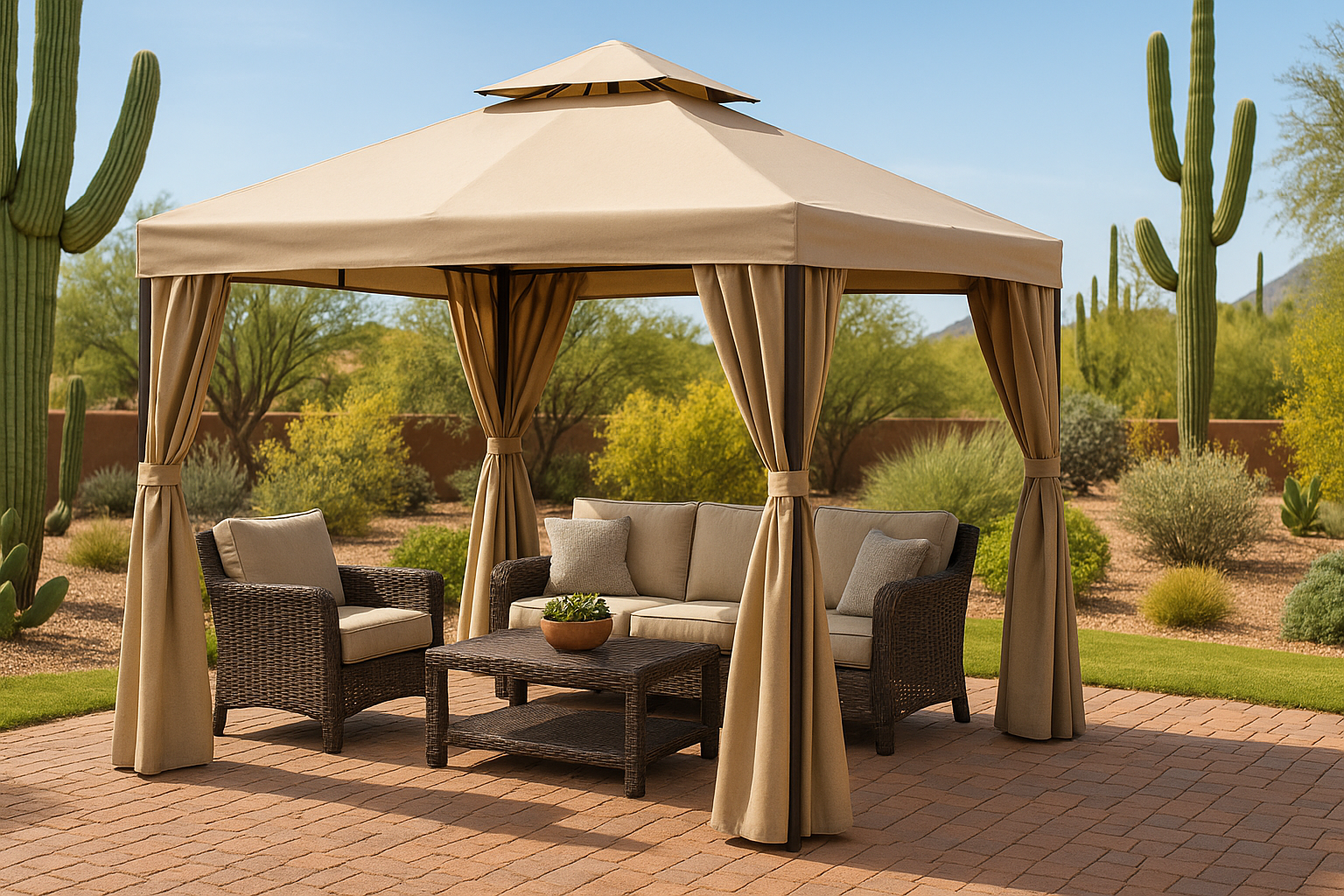
You know what? Sometimes you just need shade right now. Maybe you are renting a house in Tempe and can’t install something permanent, or maybe you’re a Business owner testing out an outdoor expansion before committing to a full build-out. Canopy tents—often called pop-up gazebos or instant shelters—are the quick fix we all reach for.
But here is the thing about buying these in Arizona: the rules are different here. A tent that lasts five years in Seattle might disintegrate in five months in Mesa. Our UV index is essentially a laser beam aimed at fabrics, and our sudden monsoon microbursts treat lightweight aluminum frames like origami. So, while we specialize in permanent, custom solutions at Arizona Shade Sails, we know that sometimes a portable canopy is the right tool for the job.
The Buyer’s Guide: What Actually Matters in the Desert
Before we look at specific models, we need to talk about the specs. If you walk into a big box store and grab the cheapest option on the shelf, you are basically throwing money into a fire.
1. Fabric Quality and Denier
You will see the letter “D” thrown around a lot in specs (300D, 600D). This stands for Denier, which measures the thickness of the individual fibers in the fabric. In cooler climates, 150D is fine. In Phoenix? That is tissue paper.
For our intense sun, you want at least 500D polyester or heavy-duty vinyl. Vinyl is heavier and hotter underneath, but it lasts longer. Polyester breathes better but needs a serious UV coating. Look for descriptions that explicitly state “UV blockage” or “UPF 50+.” If it doesn’t say it, assume it doesn’t have it.
2. The Frame Construction
This is where the jargon gets a little heavy, but stay with me. You generally have two choices: steel or aluminum.
- Steel: It’s heavy. It’s strong. It’s cheaper. The downside? It rusts. Even though we live in a dry climate, if you leave it out during winter rains or monsoon humidity, standard steel will corrode. Powder-coated steel is the minimum requirement here.
- Aluminum: It doesn’t rust and it’s lightweight. That sounds great until a 40mph gust rolls through Chandler. Aluminum bends easier than steel.
Honestly, the shape of the legs matters more than the metal. Look for hexagonal legs (six sides) rather than square legs. Hexagonal geometry resists buckling much better than a simple square tube.
3. The Truss System
Look up inside the tent. Do you see a full truss system (bars crisscrossing across the middle) or just an open cathedral ceiling? The full truss Design provides significantly more structural integrity. It helps the tent keep its shape when the wind pushes against the canopy top.
Top Reviews: The Best Canopies for AZ Patios
We have looked at the specs, so let’s talk about real-world performance. These are the types of tents that tend to survive the Phoenix metro area longer than a single season.
The Heavyweight Champ: Eurmax Premium 10×10
If you have been to a farmers market in Gilbert or an art walk in Scottsdale, you have seen these. They are the gold standard for “pop-up” structures that are actually durable.
- The Good: The frame is a beast. It usually features hexagonal legs that are tough to dent. The fabric is usually 500D polyester with a decent PU coating, which helps shed water during those sudden storms.
- The Bad: It is heavy. Like, really heavy. If you are a homeowner moving this around your patio alone, you might throw your back out. It’s also pricier than the average tent.
- Verdict: If you want something you can leave up for a few days at a time without panicking, this is it.
The Mid-Range Contender: ABC Canopy Commercial Series
This is arguably the most popular option for homeowners who want quality without the full commercial price tag. It sits right in the sweet spot.
- The Good: They offer a massive variety of Colors (though I’d recommend sticking to lighter colors like beige or white—dark blue will turn your patio into an oven). The stitching is double-reinforced, which is usually the first thing to fail on cheaper models.
- The Bad: The paint on the frame tends to chip after a year or so, leading to minor surface rust.
- Verdict: A solid choice for weekend BBQs in Mesa or covering a play area for the kids.
The Budget Pick: Coleman Instant Canopy
Okay, look. Sometimes you just need shade for one party, or you’re on a tight budget. Coleman makes a decent product.
- The Good: It is incredibly easy to set up. You can practically do it with one hand. It’s lightweight and packs down small.
- The Bad: Do not—and I repeat, do not—leave this up in a storm. The frame is not built for high winds, and the fabric is thinner. The sun will eat this fabric within two summers if left out constantly.
- Verdict: Good for occasional use, but treat it like a temporary guest, not a permanent resident.
Quick Comparison
Here is a quick breakdown to help you visualize what you are getting for your money.
| Feature | Commercial Grade (Eurmax) | Mid-Range (ABC Canopy) | Budget (Coleman/Generic) |
|---|---|---|---|
| Frame Material | Hexagonal Steel/Alum | Square/Hex Steel | Lightweight Steel |
| Fabric Density | 500D – 600D | 300D – 500D | 150D – 300D |
| Wind Tolerance | High (25-30 mph) | Medium (15-20 mph) | Low (<10 mph) |
| Best Use | Business / Long-term | Backyard / Weekend | Beach / One-day Event |
The “Arizona Factor”: Keeping Your Tent Alive
You bought a good tent. Great. Now, how do you keep it from becoming landfill fodder? The desert environment is harsh, and maintenance here is different than in the Midwest.
Anchoring is Everything
I cannot stress this enough: staking is not enough. The ground in Phoenix is often hard-packed caliche clay; stakes either won’t go in, or they slide right out when the ground gets soaked during a monsoon. You need weight.
Sandbags are the standard, but honestly? They get messy. The fabric bags eventually rot from the sun, and you end up with a pile of sand on your nice pavers. I recommend PVC pipe weights or specialized rubber weight plates that slot onto the legs. You want at least 40 lbs per leg. If a haboob is rolling in, 40 lbs might not even be enough—take the canopy off the frame.
Sun Rot is Real
Ultraviolet degradation is the silent killer. You won’t notice it until you go to take the canopy off and your finger pokes right through the fabric. To extend the life of your canopy, use a spray-on UV protectant (like the stuff used for boat covers) once a season. It adds a sacrificial layer that the sun burns off instead of burning your fabric.
The “Oven Effect”
A dark canopy looks sleek, sure. But a black or navy blue tent in July is basically a radiator. It absorbs the heat and radiates it downward. For Arizona patios, lighter colors are superior. White, beige, or light gray reflect the sun and can keep the area underneath significantly cooler.
When a Tent Just Isn’t Enough
Let’s be real for a second. Canopy tents are great for flexibility. You can move them from the pool deck to the driveway; you can take them camping. But they are high maintenance. You have to set them up, weigh them down, take the top off when the wind picks up, and replace the fabric every couple of years.
If you find yourself leaving your pop-up tent up 24/7, you are fighting a losing battle against the weather. You might notice the frame starting to creak, or the color fading to a weird shade of greyish-pink. That is usually the moment homeowners start looking for something that doesn’t require a panic drill every time the weather forecast predicts wind.
This is usually where we come in.
Permenant Shade Structures, like custom Shade Sails, solve the problems that tents create. They are built on steel Posts cemented into the ground. The fabric is architectural grade, meant to withstand 80mph winds and ten years of baking sun. They don’t flap around, they don’t need sandbags, and they cover awkward shapes that a 10×10 square tent just can’t handle.
However, if you aren’t ready for that level of commitment or construction, a high-quality commercial canopy tent is a fantastic bridge solution. It lets you test out where you want shade in your yard. Maybe you think you want shade over the BBQ, but after using a tent for a month, you realize you actually need it over the seating area. A tent gives you the freedom to experiment.
Making the Choice
At the end of the day, the best canopy tent for your patio depends on how much work you want to do.
If you want a “set it and forget it” vibe, you are going to be disappointed with any pop-up tent in Arizona. They all require active management. But if you are willing to buy the right weights, choose the right fabric, and take it down during storms, a high-quality canopy can transform a scorching brick patio into a usable outdoor living room.
Just remember:
- Go Heavy: Thicker legs, thicker fabric.
- Go Light: Lighter colors reflect heat.
- Go Weighted: 40lbs per leg, minimum.
Whether you stick with a portable option or eventually decide to upgrade to something permanent, the goal is the same—reclaiming your outdoor space from the sun.
If you are tired of replacing temporary tents or just want a shade solution that adds value and style to your property without the hassle, we are here to help you explore your options. Give Arizona Shade Sails a call at 480-418-8438 or visit our website to Request a Free Quote today. Let’s make your patio cool again.