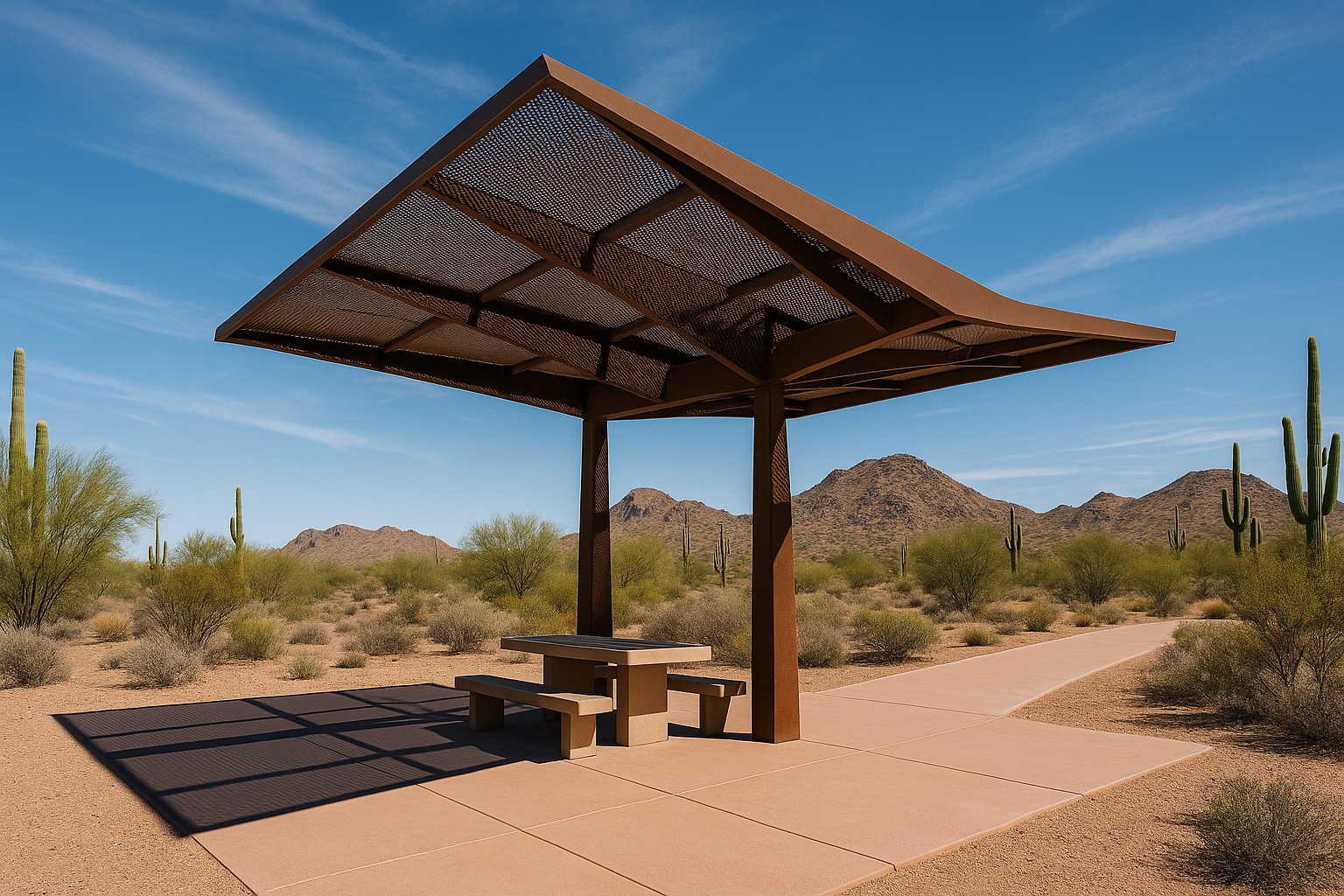
Living in the Valley of the Sun means you already know the brutal reality of our summer heat, where stepping outside can literally feel like opening an oven door. Honestly, finding decent shade isn’t just some backyard luxury for folks in Phoenix or Scottsdale; it is a straight-up survival tactic. But if you think getting relief means throwing up a flimsy canvas tarp and hoping for the best, you are missing out on some seriously cool modern engineering.
More Than Just a Glorified Canvas Tarp
Let me explain how things used to be. Back in the day, if a local Business in Mesa or a homeowner in Gilbert wanted a little extra shade over their patio, they basically slapped up a flat piece of Fabric. They tied it to some wooden Posts, crossed their fingers, and called it a day. Naturally, those old setups sagged after a few weeks. They collected rainwater like a giant swimming pool in the sky. Eventually, they just ripped to shreds during the very first summer storm.
You know what? The shade industry has completely changed since then. Modern custom Shade Sails rely on advanced tensioning structures that borrow heavily from the maritime and architectural worlds. We are talking about genuine engineering here.
Today, companies like ours at Arizona Shade Sails use specialized Materials like High-Density Polyethylene (HDPE) mesh. This stuff is practically indestructible. It doesn’t rot, it doesn’t mildew, and it stretches just enough to create a drum-tight surface. When you combine high-tech fabrics with structural steel, the results are completely different from what people were building twenty years ago.
It really is that simple. Better materials just make better Shade Structures in AZ. But the fabric is only half the story.
The Magic Trick? It Is All About Tension
Here is the thing about large spans of fabric. If they are loose, they fail. Wind grabs them, flaps them around, and eventually tears the fibers apart.
So, how do modern engineers fix this? They use tension.
A well-designed backyard shade sail does not just hang there. It is actively pulled tight across multiple anchor points using marine-grade stainless steel Hardware. We use heavy-duty turnbuckles and shackles to dial in the exact amount of tension required for the specific Design.
Crazily enough, there is actually a hidden steel cable running through the outer edge of the fabric. This perimeter wire rope works like a flexible skeleton. When we tighten the corners, that hidden cable pulls against the fabric, creating an incredibly rigid surface. You could bounce a quarter off a properly tensioned Commercial Shade sail.
Let’s look at a quick breakdown of how the old methods compare to modern engineering:
| Component | The Old Way | Modern Engineering |
|---|---|---|
| The Fabric | Canvas or cheap nylon | High-Density Polyethylene (HDPE) |
| The Hardware | Ropes and standard knots | Marine-grade stainless steel turnbuckles |
| The Edges | Simple folded seams | Hidden perimeter steel wire ropes |
You can quickly see why modern setups last so much longer. The tension keeps the fabric smooth, which stops the wind from destroying it. It honestly makes a world of difference for homes and Parks across Chandler and Tempe.
Wait, Won’t These Things Just Fly Away?
Now, here is a mild contradiction that trips people up. Shade sails look exactly like giant kites, right? They are huge, wide-open pieces of fabric stretched out in the air. So naturally, you would think they would just fly away the second a stiff breeze rolls through town.
But they don’t.
I know it sounds crazy, but modern shade structures are engineered to handle serious wind loads. When the summer monsoon storms roll in over the Superstition Mountains, bringing those massive walls of dust and intense winds, a properly installed shade sail simply stays put.
How? Because the magic happens completely underground.
People always look up at the pretty colored fabric, but they completely ignore the massive steel columns holding it all together. You cannot just bolt a huge shade sail to a standard patio cover or a flimsy wooden fence post. The wind forces are way too strong. To safely handle the crazy weather we get in Phoenix and Mesa, engineers have to calculate exactly how much force the wind will put on the fabric.
Then, we build a foundation to match.
- Massive Footings: We dig deep holes. Sometimes we have to go several feet into the hard Arizona dirt to ensure absolute stability.
- Structural Steel: We use thick, heavy-duty structural steel columns instead of cheap aluminum poles.
- Tons of Concrete: We pour massive amounts of concrete into those footings to anchor the steel columns permanently into the earth.
- Computer Modeling: Engineers use specialized software to model wind resistance, making sure the entire system holds together when the weather gets rough.
It is a lot of heavy lifting behind the scenes. We spend days doing dirty, sweaty work in the trenches just to ensure that your new patio shade looks light and effortless floating up in the sky.
The Science of Actually Staying Cool
Let’s take a slight tangent here. Have you ever tried standing under a solid metal awning in the middle of July? It is miserable. The metal heats up from the sun, and the hot air gets trapped completely underneath it. You end up standing in a stagnant oven, sweating right through your shirt.
This brings us to another amazing benefit of modern engineering: breathability.
The high-density polyethylene mesh we use is woven tightly enough to block out harmful UV rays, but it is porous enough to let hot air escape. Heat naturally rises. With a solid roof, that heat gets trapped. With a modern breathable shade sail, the hot air just rises right through the tiny gaps in the fabric.
This constant upward flow of warm air actually pulls cooler air in from the sides. It creates a very subtle, natural breeze underneath the structure. You get absolute protection from the scorching sun, but you don’t trap the heat. Temperatures underneath a high-quality shade structure can be up to twenty degrees cooler than standing out in the direct sunlight.
For businesses running restaurant patios in Tempe, or for folks just trying to let their kids play outside in Gilbert, that twenty-degree drop is absolutely everything.
It changes how you use your property. You stop hiding indoors all summer. Instead, you can actually enjoy your backyard, your swimming pool, or your commercial outdoor seating area.
Looking Good While Doing It
Function is important, obviously. You want your family and your customers protected from the UV radiation. But let’s be totally honest with each other for a second; you also want it to look really cool.
This is where the engineering finally meets the art.
If you drive around upscale shopping centers in Scottsdale, you will probably notice that most commercial shade sails are not just flat squares. They look like they are twisted or warped in the air.
There is a fancy architectural term for this: a hyperbolic paraboloid.
In normal, everyday language? We just call it a twist.
By setting the anchor points at different heights—for example, two high points on opposite corners and two low points on the other corners—the fabric naturally twists into a three-dimensional shape. It looks incredibly modern and stylish. It catches the eye instantly.
But here is the really clever part. That beautiful twisted shape isn’t just for decoration.
Creating a hyperbolic paraboloid actually increases the structural integrity of the entire shade system. The 3D twist naturally forces the fabric to pull against itself in multiple directions simultaneously. This prevents the middle of the sail from sagging over time. It also prevents leaves and debris from piling up in the center. Everything simply slides right off the edge.
So, that gorgeous architectural design you see outside fancy hotels and modern office buildings is actually a brilliant engineering trick to make the structure last longer. Pretty brilliant, right?
Expanding Beyond the Backyard
While homeowners absolutely love these structures for their driveways and pools, the commercial applications are expanding rapidly across Arizona.
Think about it from a business perspective. Every square foot of commercial real estate is expensive. If a local restaurant has a massive outdoor patio that sits completely empty from May through September because it is too hot, they are losing money every single day.
By installing commercial shade structures, business owners instantly reclaim that lost space.
- car dealerships: They use massive sails to protect their expensive inventory from sun damage and hail.
- City Parks: Municipalities install them over Playgrounds so the plastic slides don’t literally burn children.
- HOA Communities: Neighborhoods use them to cover community mailboxes and swimming pool lounging areas.
- schools: They protect outdoor cafeterias and basketball courts to keep kids safe during recess.
The engineering is completely adaptable. Whether we are stretching a small, intimate sail over a residential hot tub in Phoenix, or installing a massive, multi-sail network over a corporate Parking lot in Chandler, the underlying physics stay exactly the same.
Deep footings. Structural steel. Marine-grade tension hardware. Advanced HDPE mesh.
It is a proven formula that simply works.
Wrapping Things Up
The way we protect ourselves from the Arizona sun has evolved. We no longer have to settle for ugly metal roofs that trap heat, or flimsy canvas tarps that fall apart in the wind.
Thanks to modern engineering, we can create outdoor environments that are genuinely comfortable, structurally sound, and visually stunning. By blending advanced materials with heavy-duty construction techniques, Arizona Shade Sails can dramatically improve how you interact with your outdoor spaces. You deserve a backyard or a commercial space that actually feels welcoming, even in the dead of summer.
Are you ready to stop hiding inside all summer and finally take back your outdoor space? Give the experts at Arizona Shade Sails a call today at 480-418-8438 to discuss your project and Request a Free Quote. We would absolutely love to help you build something amazing.