Let’s be real, the Arizona sun is absolutely brutal by the time June rolls around, making your backyard feel more like an oven than a relaxing retreat. Whether you own a bustling local café or just want to enjoy a peaceful Sunday morning on your patio without getting scorched, finding the right coverage is entirely essential. Honestly, relying on those flimsy pop-up umbrellas just isn’t going to save you from the intense, unrelenting desert heat.
Why Traditional Awnings Just Aren’t Cutting It Anymore
You know what? For decades, we all just accepted that having a solid aluminum or wood patio cover was the only way to get some relief outside. People would bolt these heavy, clunky structures to the side of their houses and hope for the best. But here’s the thing; those traditional setups often create a miserable greenhouse effect. The solid roofs trap the rising hot air directly underneath them. So, while you might be out of the direct sunlight, you are still sitting in a stagnant pocket of 115-degree air.
I remember trying to host a barbecue a few summers ago under an old metal awning. Everyone was huddled in the one corner that actually had shade, constantly shifting their chairs as the sun moved, while the trapped heat radiated down on our heads. It was miserable. If you want a comfortable outdoor living space, you need a solution that breathes. You need something that blocks the UV rays but still lets the hot air escape naturally through the top.
Enter the Magic of Architectural Shade Sails
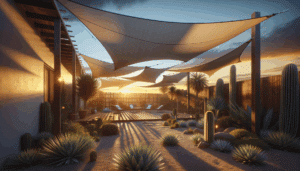
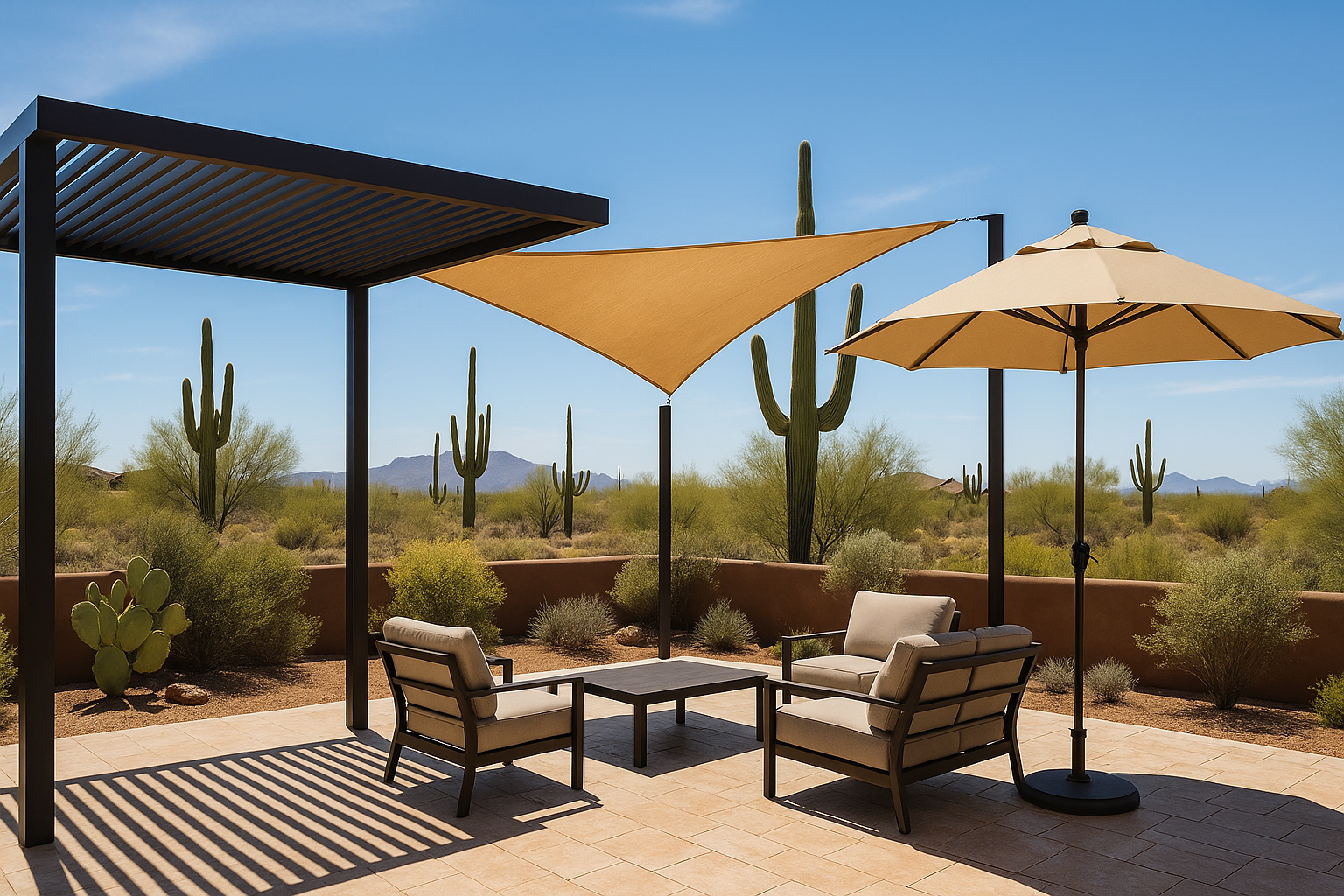
If you have driven around Phoenix or Scottsdale lately, you have probably noticed these sweeping, modern Fabric structures stretched tight over driveways, pools, and restaurant patios. They look almost like giant, floating kites. These are custom shade sails, and they are completely changing the way we handle the desert climate.
Let me explain the science behind them really quickly. Professionally installed sails use high-density polyethylene (HDPE) fabric. In structural engineering terms, we call this a tensioned membrane structure. In everyday language? It is basically a superhero cape for your yard that is pulled incredibly tight using stainless steel Hardware. Because the fabric is knitted rather than completely solid, it allows the hot air to rise and pass right through the material. This simple feature can actually drop the ambient temperature underneath by up to 20 degrees.
Let’s look at how they stack up against the old-school methods:
| Shade Solution Type | Heat Trapping Level | Visual Appeal |
|---|---|---|
| Tensioned Shade Sails | Very Low (Breathable) | Modern, Sleek, Customizable |
| Solid Wood Pergolas | High (Traps rising heat) | Heavy, Traditional, Bulky |
| Metal Patio Awnings | Very High (Radiates heat) | Dated, industrial, Clunky |
Mastering the Art of the Overlapping Design
One of the coolest things about choosing tensioned fabric is the sheer flexibility of the design. You are not stuck with a boring, flat square. By anchoring the corners at varying heights, installers create what is called a hyperbolic paraboloid—often just called a “hypar” twist. This twisting shape is not just for looks; it actively prevents wind from catching the sail and stops rainwater from pooling in the center.
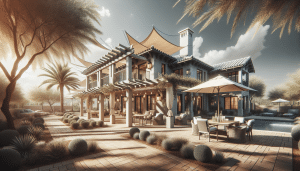
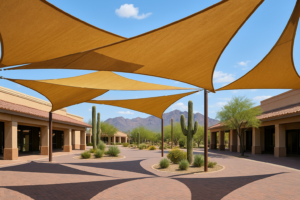
When you start overlapping multiple sails, the visual effect is incredible. Picture a backyard in Gilbert where three different triangular sails overlap over a swimming pool. As the sun moves across the Arizona sky, the layered shadows shift and change, providing continuous coverage without making the pool area feel boxed in or completely dark. It feels open, it feels airy, and it looks like a modern art Installation right in your own backyard.
You do have to think about the sun’s trajectory, though. The sun is much lower in the southern sky during the winter, and it beats down directly from above during our brutal summers. A well-designed Phoenix patio shade setup accounts for those angles, ensuring you actually have shade exactly where you want it, exactly when you need it.
Freestanding and Cantilevered Structures
Sometimes you simply cannot attach a heavy shade structure to your house. Maybe your stucco exterior isn’t strong enough to handle the tension loads, or maybe your HOA has strict rules about modifying the roofline. That is where freestanding structures and cantilevered designs save the day.
A cantilever design uses heavy-duty structural steel columns on just one side, allowing the Shade Canopy to stretch out over an area without having poles blocking your view. These are incredibly popular around swimming pools in Mesa and Chandler. You get all the sun protection you need over the water, but nobody has to dodge a steel post when they jump off the diving board.
These freestanding setups do require substantial concrete footings to handle the tension. The steel Posts have to lean back slightly—usually a few degrees—so that when the massive fabric is pulled tight, the post pulls forward into a perfectly straight, plumb position. It is a brilliant bit of engineering that looks completely effortless once it is finished.
Commercial Spaces Need Serious Love, Too
We have talked a lot about backyards, but businesses face an even tougher challenge. If you run a restaurant with an outdoor patio in Tempe, every single table that sits empty because it is too hot represents lost revenue. Customers simply will not sit and eat if they are sweating through their shirts. Upgrading to high-quality commercial Shade Structures is a pure Business necessity.
Think about the alfresco dining boom we have seen recently. People love eating outside, provided the environment is comfortable. A well-designed commercial setup offers several massive benefits:
- Maximizing your usable square footage: By keeping the patio cool, you can seat customers outside comfortably for several more months out of the year.
- Protecting your valuable assets: UV rays absolutely destroy outdoor furniture, fading fabrics and cracking plastics. Good shade protects your investments.
- Creating a visual landmark: Brightly colored, overlapping sails catch the eye of people driving by, making your business stand out from the boring beige strip malls around it.
It is not just restaurants, either. car dealerships, apartment complexes, and office buildings with outdoor employee break areas are all realizing that throwing a cheap umbrella over a picnic table is a bad strategy.
The Monsoon Factor: Why Material Engineering Matters
If you have lived in Arizona for more than a year, you know all about our summer monsoons. Those sudden, violent haboobs can roll in quickly, bringing 60 mile-per-hour wind gusts that will rip a standard patio umbrella out of its stand and send it flying into the neighbor’s yard.
You might assume a solid, heavy roof handles high winds better than a fabric sail, right? Well, surprisingly, that is a mild contradiction to the truth. When wind hits a solid aluminum awning, it creates massive uplift pressure. The wind has nowhere to go, so it pushes up hard against the structure, trying to rip it off the fascia board.
Because high-quality shade sails are made of knitted mesh, they are naturally porous. They let a significant portion of that wind pressure pass right through the tiny gaps in the fabric. They do not act like a giant parachute catching the wind. Now, obviously, the structural steel poles and the marine-grade stainless steel turnbuckles holding everything together have to be engineered to handle heavy loads, but the breathability of the fabric itself is what keeps the whole system secure during a summer storm.
Matching the Shade to Your City’s Vibe
Every city in the Valley has its own unique architectural personality, and your Arizona shade solutions should definitely reflect that. You do not want a structure that looks completely out of place.
If you are out in Scottsdale, you often see very sleek, minimalist designs. Homeowners there tend to prefer neutral Colors like desert sand or charcoal grey, creating a luxurious resort-style aesthetic that blends perfectly with modern desert landscaping.
Head over to Chandler’s tech corridor, and you will find much bolder, geometric setups. Businesses love using bright, contrasting colors to create an energetic, innovative atmosphere for their employees and clients.
Meanwhile, in historic parts of Mesa, maintaining the traditional charm of the property is key. We often see designs that mimic the earthy tones of the surrounding environment, using rich terracotta or deep greens to complement older, established trees and classic brickwork. It really is about matching the environment. It is subtle, but it makes a huge difference in the final look of the property.
Taking the Next Step Toward a Cooler Yard
Ultimately, surviving the desert heat means adapting to it cleverly. You do not have to abandon your yard or your business patio from May to October. By choosing a modern, breathable tensioned structure, you can reclaim your property and actually start enjoying the fresh air again. It is truly amazing how much a well-placed shadow can change your entire daily routine.
Let the experts at Arizona Shade Sails help you design the perfect custom oasis so you can finally beat the heat in style. Give us a call right now at 480-418-8438 to discuss your ideas. You can also easily Request a Free Quote to get your shading project started today!