Arizona Shade Sails / Planning guide
Shade Sail Prices: Fabric-Only vs Installed Work
The phrase “shade sail price” can describe three different purchases. Separate them before deciding whether quotes are comparable.
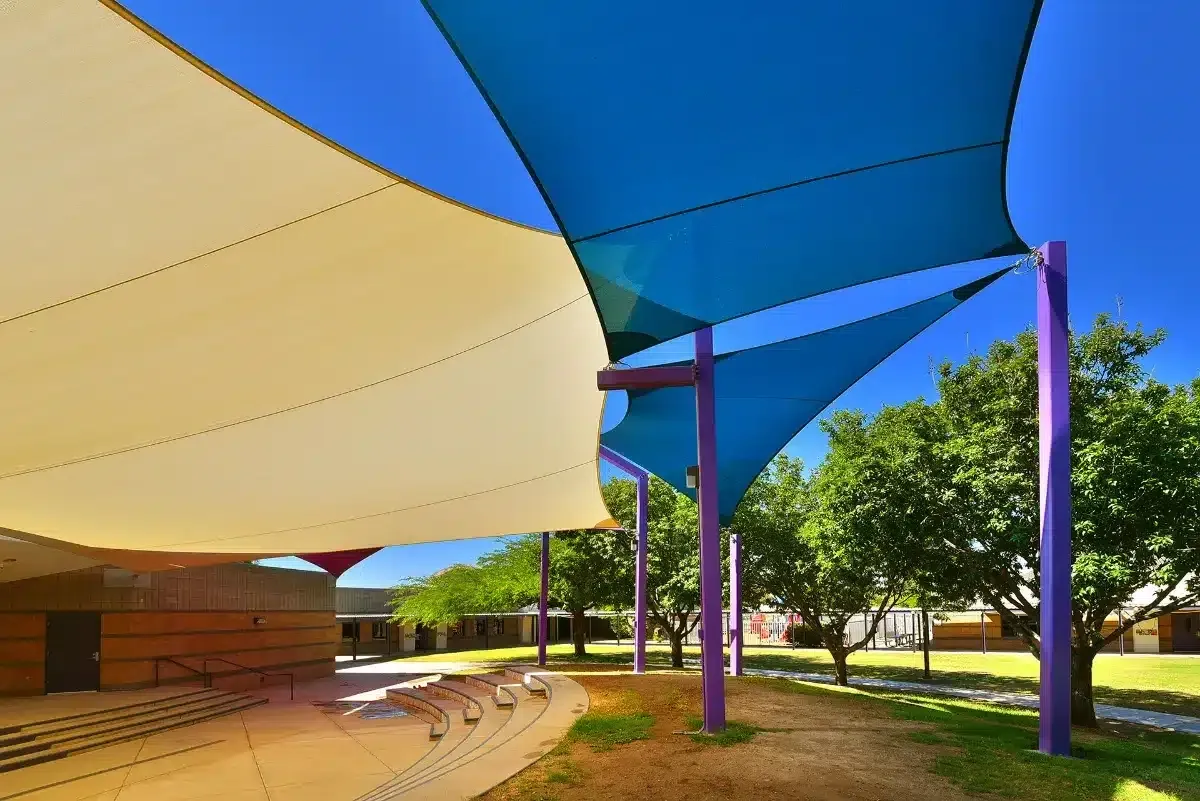
Project photograph / Coyote Trail / SHADE Industries
By Arizona Shade Sails / Published / Updated
01 / Planning detail
Three purchases, three different comparisons
| Purchase | Typical decision | What the fabric price omits |
|---|---|---|
| Custom top only | Fabricate for confirmed suitable anchors and agreed measurements | Support assessment, foundations and installation unless separately included |
| Replacement service | Review condition, measure, remove and reinstate panels | Structural repairs or modifications outside the agreed replacement scope |
| New installation | Develop coverage and the complete supporting system | Any stated owner/GC-supplied work or proposal exclusions |
02 / Planning detail
A loose fabric panel
A fabric-only price does not include a new supporting system, foundations or the assessment of existing anchors. Nominal panel dimensions also do not establish the correct tensioned fit.
03 / Planning detail
A replacement project
Replacement scope can include condition review, measurement, removal, new fabric, appropriate hardware and reinstatement. Existing supports may require additional work; reuse is not guaranteed.
04 / Planning detail
A complete new installation
A new custom structure may include design, engineering/permits, steel, foundations, fabric and installation. Site access and restoration can also contribute to the scope.
05 / Planning detail
Use the correct comparison
Tell the provider whether you need loose fabric, an existing-system review or turnkey new construction. Ask what the proposal includes and which assumptions remain unresolved. Ask for a price against the work you actually need, with inclusions and exclusions stated.
06 / Planning detail
Your next-step checklist
- Identify the type of purchase.
- Provide existing drawings and photos if relevant.
- Compare removal, hardware and reinstatement scope.
- Read coverage, exclusions and warranty terms.
07 / Planning detail
Custom top only: establish what it fits
SHADE Industries’ FAQ describes custom tops fabricated from anchor-to-anchor measurements. That service does not make unknown existing anchors suitable or include every installation task automatically. Confirm the measurement method and the responsibilities for supporting components.
The finished fabric dimension and the connection geometry are not necessarily identical. Hardware and clearances belong to the selected design. A small retail sail’s marked size therefore does not establish the correct custom-panel order.
08 / Planning detail
Replacement service: clarify the handoffs
An installed replacement needs more than fabric selection. Condition review, final measurement, safe removal, hardware decisions and reinstatement can form part of the work. Confirm which tasks are included and what happens if supports need repair.
If the original coverage no longer suits the activity, ask for a revised-layout assessment. Pricing a like-for-like panel and pricing a new connection geometry are different scopes even when the property and fabric color stay the same.
09 / Planning detail
New construction: compare the complete system
With no suitable supporting system in place, fabric-only pricing leaves the major structural questions unresolved. A new proposal may include coverage design, approvals, steel, foundations, connections, fabricated panels, installation and restoration.
State any owner/GC-supplied work and ask for the selected fabric’s information. The aim is not to declare every custom sail expensive; it is to identify which purchase and responsibilities the price actually represents.
Clear answers
Questions before the next step.
Why can two shade-sail quotes differ so much?
They may describe different purchases: loose fabric, an assessed replacement service or an entire new supporting system. Materials, access and included work also vary. Compare the scopes before comparing the totals.
Can I supply my own supports?
Discuss the design and responsibility with the provider first. Supplied supports still need to be suitable for the proposed loads and connections; they cannot be accepted purely because they are already on site.